
Travel
Travel Essentials for Long Flights
Long-haul flights — anything over 6 hours — are a different experience from short domestic hops. The wrong preparation leaves you stiff, exhausted, and arriving at your destination already drained. The right gear and habits make a genuine difference, especially on overnight or transoceanic flights.
This guide covers the most useful items to bring on a long flight, why each one matters, and practical tips for making the most of your time in the air. Whether you’re flying economy or business class, most of these apply equally.
BY MARINA SGROI | May 9, 2026 7:13 pm EST
Comfort Essentials
Travel Neck Pillow
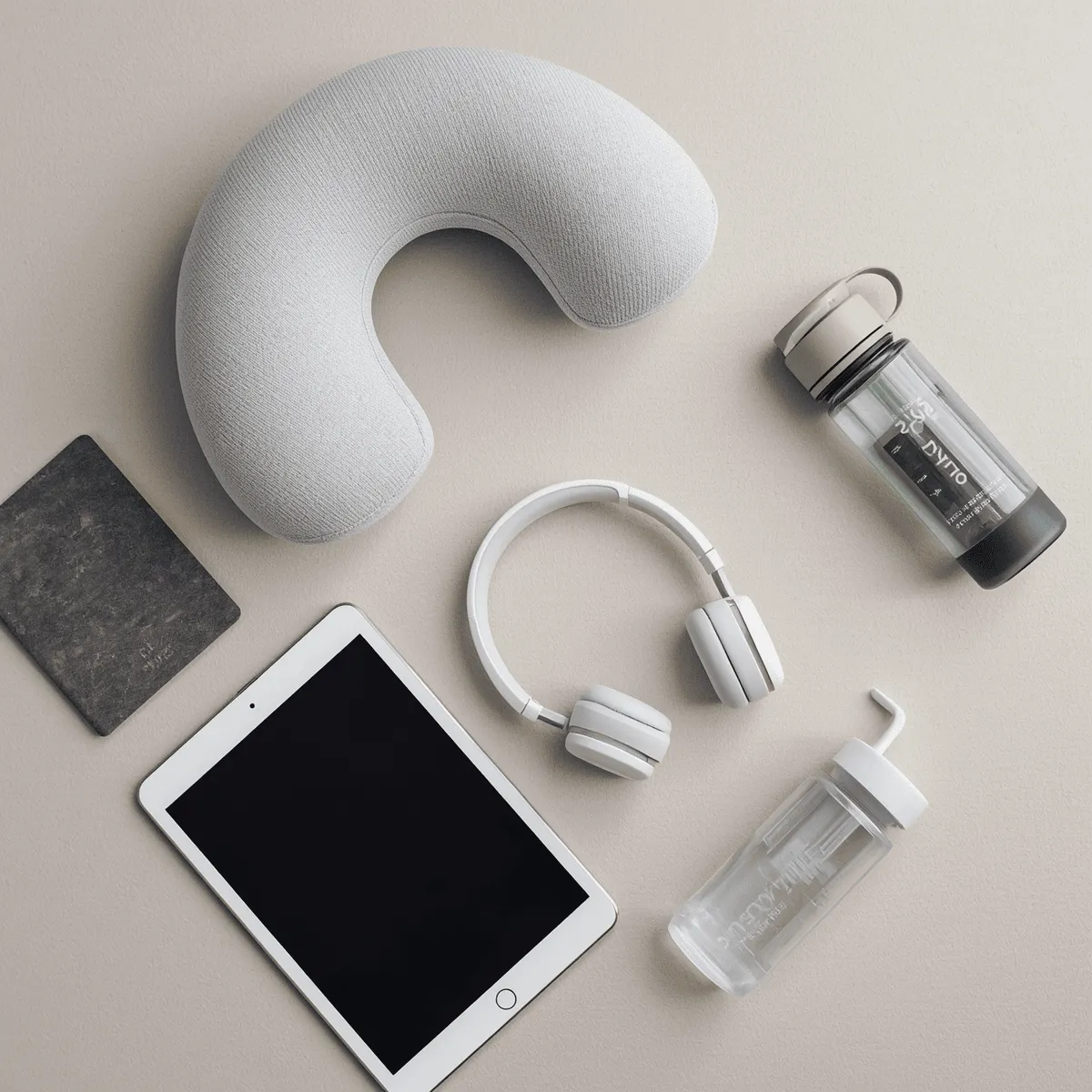
A good neck pillow is probably the single most impactful comfort item for long flights, especially if you’re trying to sleep upright in economy. The classic U-shaped foam or memory foam pillow is the most common, but many frequent flyers prefer a different design: a pillow that supports the chin from dropping forward, which is the main reason people wake up with neck pain after sleeping sitting up.
Memory foam pillows mold to your neck better than inflatable ones but take up more bag space. Inflatable pillows pack down to almost nothing, which makes them popular for carry-on-only travelers. Whichever style you choose, look for one with a soft, washable cover — you’ll appreciate it on long trips.
Eye Mask
Cabin lighting on long-haul flights is inconsistently managed. Even when the main lights are dimmed, window shades get opened, flight attendants use work lights, and neighboring passengers keep their screens on. A contoured sleep mask (one that doesn’t press directly against your eyes) blocks all of that and makes a meaningful difference for sleeping in economy.
Contoured masks with molded eye cups are more comfortable for most people than flat foam masks because they don’t press on your eyelids. Look for a mask with an adjustable strap so it stays in place when you shift position during sleep.
Noise Cancelling Headphones or Earplugs
Cabin noise on a long-haul flight runs between 75–85 decibels — roughly equivalent to a busy restaurant or a running vacuum cleaner, for 10+ hours. That sustained noise is fatiguing even when you’re not consciously noticing it.
Over-ear noise cancelling headphones (like the Bose QuietComfort series or Sony WH-1000XM5) are the most effective option for blocking engine noise and making entertainment clearer. They’re bulkier to pack but make a dramatic difference on long flights. Foam earplugs are a compact alternative that block more passive noise than you’d expect — they’re worth keeping in your personal item even if you bring headphones, for when you want to sleep without wearing something over your ears.
Compression Socks
Sitting still for 8–14 hours reduces circulation in your legs and increases the risk of swelling and deep vein thrombosis (DVT). Compression socks apply graduated pressure to your calves — tighter at the ankle, lighter toward the knee — which helps keep blood moving. They’re especially worth wearing on flights over 8 hours, and doctors commonly recommend them for anyone with circulation concerns, a history of DVT, or who tends to experience leg swelling on flights.
You don’t need medical-grade compression for flights — 15–20 mmHg is the standard travel compression level and is widely available. Put them on before you board, not after you’re already sitting.
Travel Blanket or Wrap
Airline blankets on long-haul flights vary widely in quality and availability. Economy cabins sometimes run out of blankets before everyone boards, and the ones provided are often thin. A lightweight travel blanket or large scarf-style wrap packs into a small pouch and gives you reliable warmth regardless of what the airline provides.
Merino wool wraps are popular because they regulate temperature well in both cold and warm cabins, don’t wrinkle, and double as a scarf at your destination. Compact fleece blankets are a more budget-friendly option.
Tech and Power Essentials
Portable Charger (Power Bank)
Not every long-haul aircraft has seat power, and even those that do sometimes have non-functional outlets. A portable charger removes that uncertainty entirely. For a long flight, a 10,000 mAh power bank gives most smartphones 2–3 full charges, which is enough for a 12–14 hour flight with heavy use.
Important: the TSA limits power banks to 100 Wh (about 27,000 mAh) in carry-on bags, and they cannot go in checked luggage. Most standard travel power banks fall well within this limit. A 20,000 mAh power bank sits at about 74 Wh — fine for carry-on.
Universal Travel Adapter
If your long-haul flight is international, you’ll land somewhere with different outlet types. A compact universal adapter that handles the major plug formats (Type A/B for North America, Type C/E/F for Europe, Type G for the UK, Type I for Australia) covers most destinations. Look for one with built-in USB-A and USB-C ports so you can charge multiple devices without bringing multiple chargers.
Downloaded Offline Entertainment
In-flight entertainment systems vary enormously by airline and aircraft. Some long-haul flights have excellent seat-back screens; others have outdated systems or nothing at all. Downloading content before you board — movies on Netflix or Apple TV+, podcasts, audiobooks, e-books, Spotify playlists — guarantees you have what you want regardless of what the airline offers. A 10–12 hour playlist of podcasts and a few downloaded movies covers most long-haul flights comfortably.
Health and Hygiene Essentials
Reusable Water Bottle
Cabin humidity on long-haul flights typically runs between 10–20% — significantly drier than most indoor environments, which are usually 30–60%. That low humidity accelerates dehydration, contributes to headaches, and makes jet lag worse. Drink more water than you think you need.
Bring an empty reusable water bottle through security and fill it at a fountain or ask a flight attendant to fill it during the flight. Relying solely on the small cups of water offered during service isn’t enough for a 10+ hour flight. A collapsible silicone bottle packs flat when empty and is a popular option for carry-on-only travelers.
Travel-Size Toiletry Kit
For overnight flights especially, a small toiletry kit makes a real difference in how you feel on arrival. The most useful items:
- Toothbrush and toothpaste — brushing mid-flight helps you feel more awake and refreshed
- Facial wipes or moisturizer — cabin air dries out skin noticeably on long flights
- Lip balm — low humidity dries lips quickly
- Hand sanitizer — tray tables and armrests are among the highest-contact surfaces in travel
- Saline nasal spray — helps with the dry, stuffy feeling many people get from recirculated cabin air
Snacks
Long-haul meal service doesn’t always align with when you’re actually hungry, and the gaps between meals can be 4–6 hours. Bringing your own snacks gives you control over timing and quality. Good long-flight snacks are non-perishable, low-odor (out of respect for neighboring passengers), and filling: nuts, protein bars, dried fruit, crackers, and dark chocolate all travel well.
Note: some countries have strict biosecurity rules about bringing food across borders. Australia, New Zealand, and the US all have restrictions on certain fresh foods, meats, and plant products. Stick to packaged, processed snacks if you’re unsure about your destination’s rules.
Tips for Sleeping on Long Flights
Sleeping on a plane is a skill more than a gift. A few strategies that consistently help:
- Request a window seat. It gives you a wall to lean against and control over the window shade, and you won’t be disturbed by seatmates needing to get up.
- Adjust to destination time immediately. Set your watch to destination time when you board and try to sleep only during what would be nighttime there.
- Avoid alcohol. It may help you fall asleep faster but significantly reduces sleep quality and worsens dehydration and jet lag.
- Use all three: neck pillow, eye mask, and earplugs or noise cancelling headphones together. Each one helps; all three together make sleeping in economy genuinely achievable.
- Wear comfortable, loose-fitting clothes. Tight jeans or structured clothing becomes noticeably uncomfortable after a few hours. Many frequent long-haul travelers wear athleisure or change into comfortable clothes once on board.
Frequently Asked Questions
Q: What is considered a long-haul flight?
A: There’s no universal definition, but flights over 6 hours are generally considered long-haul. Ultra-long-haul flights — like Singapore to New York (18+ hours) or Auckland to Dubai (17+ hours) — are a category of their own and benefit most from thorough preparation.
Q: Are compression socks necessary on long flights?
A: Not strictly necessary for everyone, but recommended for flights over 8 hours, especially for anyone with circulation issues, a sedentary job, a history of blood clots, or who tends to experience swelling. For most healthy travelers on occasional long flights, staying hydrated and walking the aisle periodically provides reasonable protection. Compression socks add an extra layer of protection with minimal inconvenience.
Q: Can I bring a water bottle through airport security?
A: Yes — as long as it’s empty when you go through the security checkpoint. Fill it at a water fountain or restaurant airside. This is consistently one of the most practical things you can do before a long flight, and it’s free.
Q: Is it worth paying for an upgraded seat on a long flight?
A: For flights over 10 hours, many travelers find that premium economy — which typically offers 4–6 more inches of legroom, a wider seat, and better recline than economy — is worth the upgrade cost for the comfort difference. Full business class with lie-flat seats is significantly more expensive but transforms overnight long-haul flights. Whether it’s ‘worth it’ depends entirely on your budget, how easily you sleep upright, and how important arriving rested is for your plans.
Final Thoughts
Long flights are unavoidable if you want to reach far-away destinations. The right preparation doesn’t eliminate the experience of being in a metal tube for 12 hours — but it does make the difference between arriving depleted and arriving ready to start your trip.
The essentials are straightforward: a neck pillow, eye mask, noise cancelling headphones or earplugs, a power bank, water, and compression socks for longer flights. Everything else is a welcome bonus. Start with those and you’ll be in significantly better shape than most of the cabin.
Written by: Marina Sgroi
2026
Affiliate Disclosure: Vulindo may earn a commission when you click links to partner products on this page. This does not affect our editorial recommendations.
Owned and Operated by Marina Sgroi
61 Saint Marks Place
New York, NY, USA
Privacy | Terms & Conditions | Editorial Policy | Contact Us
Copyright 2026 | Vulindo™