
Travel
How to Choose Packing Cubes for Any Type of Trip
Packing cubes are one of those travel accessories that seem minor until you actually use them — and then you wonder how you ever packed without them. Done right, they turn a chaotic suitcase or backpack into a fully organized system where everything has a place and nothing gets buried at the bottom.
But not every packing cube works well for every trip. A compression cube that’s great for a winter ski trip is overkill for a carry-on weekend bag. This guide breaks down the main types of packing cubes, what each one is actually good for, and how to build a packing system that works for the way you travel.
BY MARINA SGROI | May 6, 2026 11:34 am EST
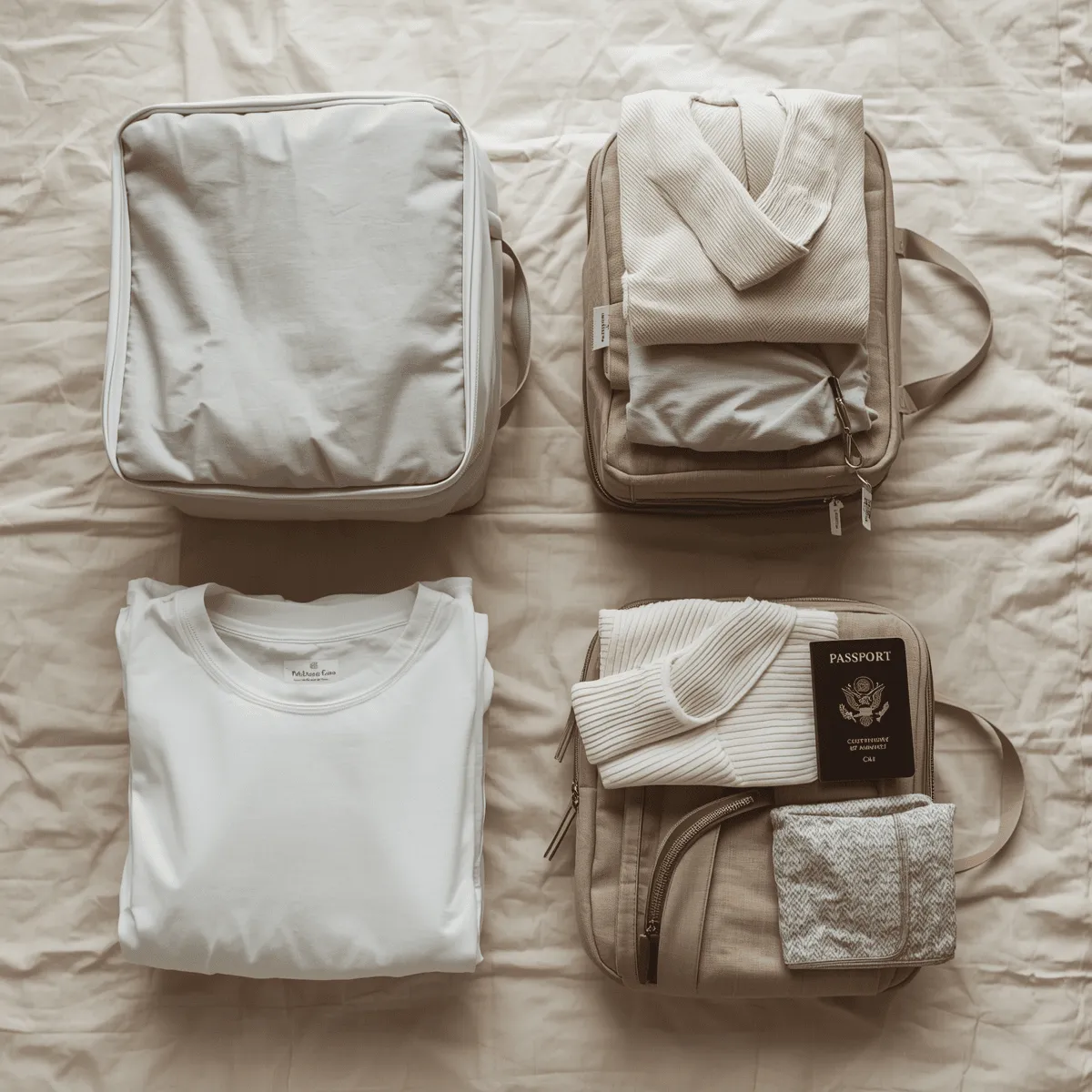
The 4 Main Types of Packing Cubes
1. Standard Packing Cubes
Standard packing cubes are simple fabric rectangles with a zipper closure. They don’t compress clothing — they organize it. Think of them as drawer dividers for your luggage. You can separate tops from bottoms, keep clean clothes away from worn ones, or dedicate a cube to each day of a trip.
Standard cubes come in small (about 10" x 7"), medium (about 13" x 9"), and large (about 17" x 12") sizes. Most travelers use a set of two or three cubes in different sizes rather than one large one, since smaller cubes are easier to stack and rearrange in a bag.
Best for: short trips, warm weather travel, lightweight packers, and anyone who primarily wants organization over compression.
2. Compression Packing Cubes
Compression cubes have a two-zipper system: one zipper closes the cube normally, and a second zipper compresses the contents down by squeezing out excess air. They can realistically reduce the volume of your clothing by 30–50%, depending on what’s inside.
They work best with bulky, compressible items: sweaters, fleece jackets, jeans, hoodies, and thick socks. They’re less effective with dress shirts, silk, or anything that wrinkles easily — the compression will crease delicate fabrics badly. They’re also heavier than standard cubes, typically adding 3–5 oz per cube.
Best for: cold weather trips, longer travel, checked luggage where maximizing space is the priority, and bulky clothing like sweaters and jackets.
3. Lightweight or Ultralight Packing Cubes
Ultralight cubes are made from thin nylon or mesh fabric and weigh as little as 0.5–1 oz per cube. They offer no compression — their only job is organization — but their minimal weight makes them popular with ultralight backpackers and carry-on-only travelers who are watching every ounce.
Mesh panels on one or both sides make it easy to identify contents at a glance without opening every cube. Several brands (Peak Design, Eagle Creek, Tortuga) make well-reviewed ultralight sets specifically for backpack travelers.
Best for: minimalist travelers, carry-on-only packing, warm weather trips, and anyone using a lightweight travel backpack where every ounce matters.
4. Waterproof or Water-Resistant Packing Cubes
Waterproof cubes are made from coated or laminated fabric that keeps moisture out. They’re genuinely useful in specific situations: separating wet swimwear from dry clothing, protecting electronics from condensation, or packing for destinations with heavy rain or outdoor activities.
Most travelers don’t need fully waterproof cubes for standard trips — a DWR-coated standard cube handles incidental moisture fine. True waterproofing is most valuable when the contents absolutely cannot get wet, like camera gear, electronics, or dry clothing being kept separate from wet items after a beach day.
Best for: beach trips, outdoor adventures, water sports travel, or packing in regions with heavy or unpredictable rainfall.
How to Choose the Right Size Packing Cubes
Packing cube sizing is not one-size-fits-all. Here’s a practical guide to matching cube size to luggage type:
For a 40L–45L Travel Backpack
Two medium cubes and one small cube typically fill a 40L backpack efficiently. Use one medium cube for tops, one for bottoms and underwear, and a small cube for socks, accessories, and miscellaneous items. Slim, rectangular cubes fit better in backpacks than wider, squarer designs.
For a Standard Carry-On Suitcase (21–22")
A set of one large cube, one medium cube, and one small cube covers most 3–5 night trips. The large cube holds the bulk of clothing; the medium handles shoes or bulky items; the small handles accessories, chargers, and small essentials.
For a Checked Bag (25–28")
Checked bags benefit from multiple cubes organized by category rather than by size. Many travelers use 4–6 cubes in a checked bag — one per clothing type or one per person when sharing luggage. Compression cubes earn their value most in checked bags where saving space for souvenirs on the way home is a priority.
The Best Packing Systems by Trip Type
Weekend Trip (2–3 Nights, Carry-On Only)
- 1 medium standard cube — tops (3 shirts, 1 light layer)
- 1 small standard cube — bottoms, underwear, socks
- 1 small cube or toiletry bag — chargers, cables, accessories
This fits comfortably in a 30–40L backpack alongside a laptop, shoes, and toiletry bag.
Week-Long Trip (6–7 Nights, Carry-On Suitcase)
- 1 large compression cube — all tops and mid-layers
- 1 medium standard cube — bottoms and underwear
- 1 small cube — socks, accessories, small items
- 1 shoe bag — keeps soles away from clothing
Cold Weather or Ski Trip
- 2 large compression cubes — base layers, sweaters, fleece
- 1 medium standard cube — everyday clothing
- 1 small cube — accessories, hats, gloves
Bulky winter clothing compresses significantly in compression cubes. A full week of cold weather clothing that would normally fill a large checked bag can often fit into a 45L carry-on with the right compression cubes.
Packing Cube Tips That Actually Help
Roll, Don’t Fold
Rolling clothing before placing it in a packing cube reduces wrinkles and fits more into each cube than flat folding. T-shirts, jeans, and casual wear all roll well.
Dress shirts and blazers are the exception — those pack better folded flat in a dry cleaning bag to minimize creasing.
Pack Cubes Against the Back Panel
In a backpack, the heaviest cubes (usually the clothing cubes) should sit closest to your back. This keeps the center of gravity close to your body and makes the bag feel lighter and more balanced when you’re carrying it.
Use One Cube as a ‘Dirty Clothes’ Bag
On longer trips, designate one cube specifically for worn clothing. As you move through your trip, transfer worn items into that cube. It keeps clean and dirty clothes completely separated without needing a separate laundry bag, and makes unpacking at home faster.
Don’t Overstuff Compression Cubes
Overstuffing a compression cube makes it harder to zip closed and can strain the zipper over time. Fill compression cubes about 80% full before compressing — the compression will take care of the rest. Starting with too much puts unnecessary stress on the zipper mechanism.
Frequently Asked Questions
Q: Are packing cubes actually worth it?
A: For most travelers, yes — especially for trips involving multiple destinations, shared luggage, or carry-on-only packing. The main benefit isn’t space savings (standard cubes don’t save space), it’s organization. Being able to find what you need without unpacking your entire bag at every hotel is a meaningful quality-of-life improvement for frequent travelers.
Q: Do compression packing cubes really save space?
A: Yes, but only for the right clothing. Compression cubes work well on soft, bulky items like sweaters, fleece, and jeans — you can realistically fit 30–50% more of those items per cube. They don’t help much with dress clothes, structured garments, or anything that’s already dense and non-compressible.
Q: What’s the difference between packing cubes and vacuum bags?
A: Vacuum bags remove significantly more air than compression cubes and save more space — but they require a vacuum or pump to seal, and clothing comes out extremely wrinkled. They work well for storing off-season clothing at home but are impractical for travel. Compression packing cubes offer a middle ground: moderate compression without the vacuum requirement or the wrinkle problem.
Final Thoughts
Choosing the right packing cubes comes down to matching the cube type to the trip. Standard cubes for organization and warm weather travel, compression cubes for bulky cold weather clothing, ultralight cubes for minimalist carry-on packing, and waterproof cubes for beach or outdoor trips.
You don’t need an expensive set to start — even a basic set of three standard cubes will immediately improve how organized your luggage feels. Once you find a system that works for your packing style, it’s easy to replicate trip after trip without thinking about it.
Written by: Marina Sgroi
2026
Affiliate Disclosure: Vulindo may earn a commission when you click links to partner products on this page. This does not affect our editorial recommendations.
Owned and Operated by Marina Sgroi
61 Saint Marks Place
New York, NY, USA
Privacy | Terms & Conditions | Editorial Policy | Contact Us
Copyright 2026 | Vulindo™